
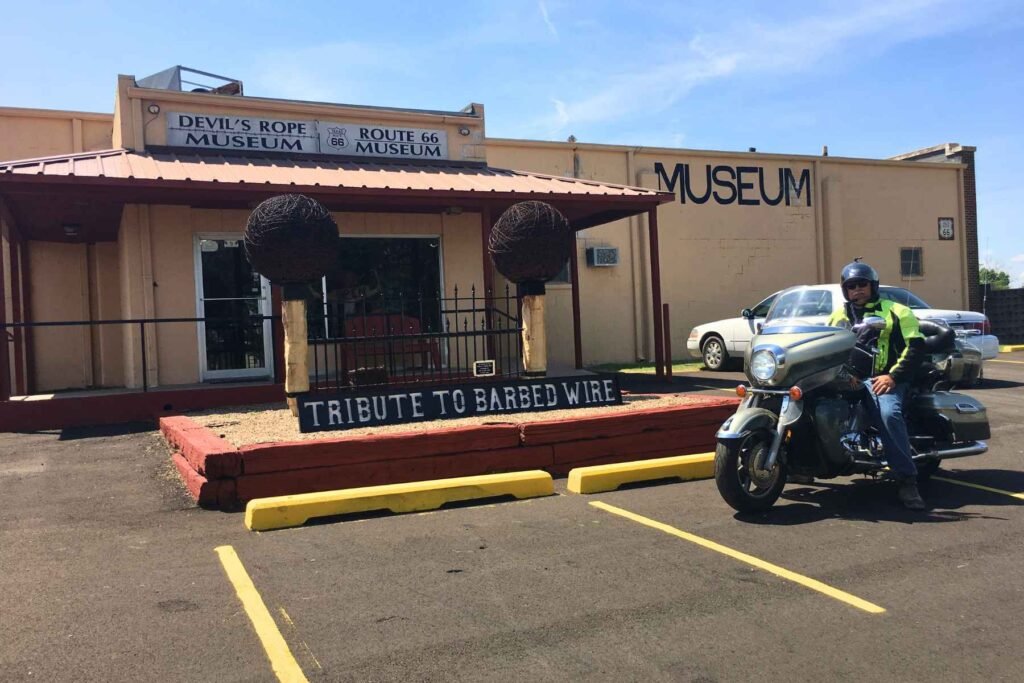
Where Barbed Wire Gets Its Fifteen Minutes of Fame
Let’s be honest, when most people think of Texas road trip stops, barbed wire is probably not the first thing that comes to mind. You’re picturing BBQ, big hats, maybe a longhorn or two. But tucked along the legendary stretch of Route 66 in McLean, Texas, there exists a museum so gloriously niche, so proudly devoted to a single product, that it demands your respect, and ideally, an afternoon of your time. Ladies and gentlemen, allow me to introduce you to the Devil’s Rope Museum, where barbed wire is not just a fencing material. It is an art form. It is a way of life.
So Why “Devil’s Rope”?
First things first, the name. “Devil’s Rope” is the nickname that Native Americans gave to barbed wire when it first started carving up the open plains in the 1870s. And honestly? Respect for the branding. Barbed wire was patented in the 1870s and rolled across the American West like a particularly pointy revolution, transforming how ranchers managed cattle and fundamentally redrawing the landscape of the frontier. Before barbed wire, the open range was truly open. Afterward, everybody knew exactly where your property ended and your neighbor’s started, which, depending on the neighbor, was either a blessing or the beginning of a very long feud. The museum, established in 1991 by a local historian and enthusiast, was born out of a desire to preserve and celebrate this underappreciated slice of American ingenuity.
Yes, They Really Have That Many Types of Barbed Wire
Here’s where things get genuinely wild. The Devil’s Rope Museum houses a collection of over 2,500 different types of barbed wire. Two thousand five hundred. If you just thought “wait, how many types of barbed wire can there possibly be?” Welcome to the club, and also, prepare to have your assumptions thoroughly demolished. Each strand on display tells a different story about agricultural innovation, regional necessity, and the deeply human impulse to keep cows from wandering where they shouldn’t. The variety is jaw-dropping, and that’s not a sentence you expect to type about fencing materials, and yet here we are.
Beyond barbed wire, the museum has expanded over the years to include fencing tools, agricultural equipment, vintage ranching gear, saddles, and clothing that paint a vivid picture of cowboy life in early Texas. Want to understand the daily grind of a 19th-century cowhand? The Devil’s Rope Museum has you covered, and not just metaphorically. There are actual items that covered actual cowboys. The exhibits connect barbed wire to the broader story of ranching culture, land ownership, and the economic forces that shaped the American West. It’s surprisingly deep for a museum about wire.
The Route 66 Connection
The museum’s location on Route 66 is no accident, and it’s not just a matter of real estate. The “Main Street of America” runs straight through McLean, and the Devil’s Rope Museum serves as both a cultural landmark and a love letter to the heritage of this legendary highway. For road trippers making their way down Route 66, the museum is one of those rare stops that rewards the curious and the spontaneous. It provides information on local Route 66 history and landmarks alongside its barbed wire exhibits, making it an essential pit stop for anyone interested in the full tapestry of American road culture. Pull over. You won’t regret it.
What to Expect When You Walk Through the Door
If you’re envisioning a dusty room with a few rusty strands hung on pegboard, think again. The Devil’s Rope Museum is an engaging, well-curated space with interactive displays, educational resources, and knowledgeable staff who can tell you far more about barbed wire than you ever imagined wanting to know (and somehow, you will want to know all of it). Guided tours are available and highly recommended for anyone who enjoys having their mind blown at a comfortable, walking pace. The presentations and occasional guest speakers add depth that goes well beyond what a self-guided wander can offer.
Families with kids are in luck, too. The museum has a dedicated children’s area with interactive displays, and it regularly hosts hands-on workshops where younger visitors can learn about fencing and even build their own small fence models. Yes, your child will come home knowing more about barbed wire than most adults, and honestly, that’s a flex. Workshops also cover traditional skills like saddle making and roping, giving the whole family a tactile connection to frontier history.
Events: It Gets Festive Around Here
The museum isn’t just a place to look at things, it’s a hub of community activity. The annual Barbed Wire Festival, typically held in the autumn, is a highlight of the local calendar. Local artisans gather to celebrate the creative possibilities of barbed wire (yes, it turns out people make art with this stuff), and the event features workshops, demonstrations, and exhibits for the whole family. Throughout the year, the museum also hosts storytelling nights, historical reenactments, and educational programs tailored for school groups. It’s the kind of place that turns a field trip into a memory.
The Part Where I Tell You It’s Free
Here’s a sentence that genuinely delights me: admission to the Devil’s Rope Museum is completely free. No entrance fees, no age-based pricing, no group surcharges. Everyone, seniors, kids, curious adults, reluctant spouses dragged off the highway, gets in at the exact same price of zero dollars. The museum does graciously accept donations to help maintain and expand its collections, and if you’ve just spent an hour having your mind expanded by the history of a fencing material, throwing a few bucks in the donation box is the least you can do.
Parking is also free and plentiful, with accessible spaces available for visitors with disabilities. The museum itself is fully navigable for wheelchairs and mobility aids, with ramps, wide pathways, and accessible restrooms throughout. Staff are trained and happy to assist anyone who needs special accommodations. There are benches throughout the exhibits for anyone who needs a breather, because it turns out that processing 2,500 types of barbed wire requires occasional moments of quiet contemplation.
Final Thoughts
The Devil’s Rope Museum is exactly the kind of place that makes road tripping through Texas worthwhile. It is specific, it is passionate, it is free, and it will absolutely change the way you look at the fence lines you drive past every day. McLean is an easy stop for anyone tracing Route 66 across the Lone Star State, and the museum makes a compelling case that sometimes the most remarkable stories are told by the humblest of objects. Who knew that a few strands of twisted wire could carry so much history? The Devil’s Rope Museum did, and now, so will you.
***I try to be as accurate as I possibly can with the details of any post I write. Keep in mind that things change due to storms, pricing, and maintenance issues. I always recommend checking the official website for updated announcements, closures, and fees before heading out on any trip. I have included a link to their website below for your convenience.***
The Devil’s Rope Museum
100 Kingsley St
McLean, TX
806-779-2225
Official Website: Devils Rope
Hours of Operation
Mon-Sat: 9am-4pm
Sun: Closed
Fees: Free/ They Accept Donations
While I put Together a Slideshow for The Devil’s Rope Museum, You can Enjoy 79 More Photos on Google Using the Button Below
Did you enjoy this post? Do you want to know when the next post comes out? Consider subscribing. I only send update emails once a week, usually on Friday.