
Florida’s Timber Story (Plus a Tree That Went to the Moon)
Let me be upfront, because that’s how I do things here.
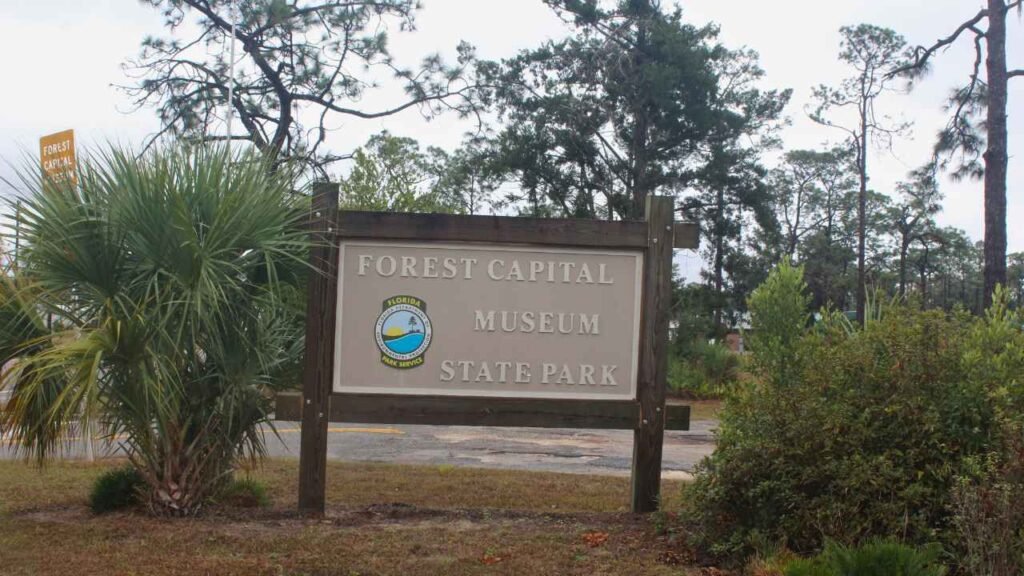
When I pulled up to Forest Capital Museum State Park in Perry, Florida, I honestly wondered if I’d made a wrong turn. There’s no grand entrance, no sweeping drive, no dramatic “you’ve arrived” moment. You’re just… there. Right off U.S. 19. A modest parking area, a small complex, and a slightly puzzled look on your face.
My first thought? “Huh. Well, okay then.”
But here’s the thing, this park sneaks up on you. Give it a little time and a bit of curiosity, and what starts as underwhelming turns into something genuinely interesting, peaceful, and surprisingly memorable. And yes… there (used to be) a tree here that went to the moon. The tree was destroyed by Hurricane Idalia in 2023.
To understand the park, you need a bit of context about Perry and Taylor County. This is Florida’s Big Bend region, less touristy, more “real Florida.” In 1965, Taylor County was officially named the “Tree Capital of the South,” thanks to its vast forestland. Florida’s timber industry once played a major role in shaping the state’s economy, and this park exists to tell that story.
1864 Cracker Homestead
The land itself once belonged to Florida Senator Pete Gibson, and the park opened in the late 1960s to preserve and share the region’s forestry heritage. One of its most significant features is the 1864 Cracker Homestead, an authentic North Florida homestead complete with a house, barn, well, and garden. This isn’t a reproduction, it’s the real thing. Walking through it gives you a glimpse into a time long before modern conveniences, when daily life depended on hard work, resourcefulness, and a deep connection to the land.
The museum is the centerpiece of the park, housed in a striking octagonal building made of cypress and pine with a glass dome ceiling. Inside, the exhibits tell the story of Florida’s forests in a way that’s both informative and engaging. You’ll learn about the longleaf pine and the thousands of products that come from it, something most people never think about. There’s also a fascinating look at the turpentine industry, once essential to naval stores and shipbuilding, along with wildlife displays featuring animals native to North Florida.
One of the standout features inside the museum is a beautifully crafted wooden map of Florida. Each of the state’s 67 counties is represented by wood native to that region, making it both educational and visually striking. It’s the kind of exhibit that makes you stop and take a closer look. And then there’s “Terry the Talking Tree.” Yes, it’s a bit quirky, but it’s also charming and memorable, especially if you’re visiting with grandkids.
A Moon Tree?
Speaking of memorable, let’s talk about the Moon Tree that used to be there. This would have easily been one of the most unexpected and delightful features of the park. A loblolly pine here was grown from a seed that orbited the moon during the Apollo 14 mission. Astronaut Stuart Roosa carried hundreds of tree seeds into space, and after the mission, they were planted across the country. One of them ended up right here in Perry, Florida. A tree that went to the moon and came back, it’s the kind of story you don’t expect to find in a small roadside park. As I mentioned above, the tree was destroyed by hurricane Idalia in 2023.
Leisurely Walk
Outside the museum, the park offers a peaceful setting for a leisurely walk. A shaded trail winds through tall longleaf pines, creating a calm and relaxing environment. In the spring, wild azaleas and dogwoods add color to the landscape, making it an especially pleasant time to visit. This isn’t a strenuous hike, it’s an easy stroll, perfect for stretching your legs and enjoying the scenery without overdoing it.
Wildlife is another quiet highlight of the park. The mix of pine forest, cypress swamp, and hardwood hammock creates a diverse habitat for birds and other animals. You might spot wild turkey, waterfowl, or wading birds, and if you’re lucky, even some of the region’s more elusive wildlife. Bringing a pair of binoculars can make the experience even better.
Bring Your Own Food
For such a small park, just 13 acres, it’s surprisingly well-equipped. There’s a visitor center, restrooms, a gift shop, picnic areas, and even a playground for grandkids. Pets are welcome on the grounds as long as they’re on a leash, though they’re not allowed inside the buildings. One thing you won’t find, however, is food. There are no concessions, so bringing a picnic is a great idea. The shaded picnic areas under the pines are quiet and inviting, making them perfect for a relaxed lunch.
There’s no camping at the park, as it’s day-use only, but there are options nearby if you want to stay overnight. Perry has a few RV parks, and there are state parks within driving distance that offer camping. I stayed at the KOA Perry, just down the road. If you’re planning a trip through North Florida, this makes for an easy and worthwhile stop.
Florida Forest Festival
If you happen to be in the area in October, the Florida Forest Festival is well worth checking out. This long-running event celebrates the region’s forestry heritage with live entertainment, food, crafts, and demonstrations. It’s a lively contrast to the park’s usual quiet atmosphere and a great way to experience the local community.
Accessibility at the park is generally good. The museum and visitor center are easy to navigate, and the grounds are relatively flat. That said, the homestead includes historic structures and natural terrain, so it’s a good idea to call ahead if you have specific mobility concerns. The staff is friendly and can help you plan your visit.
Simple Dining
Dining options in Perry are simple but sufficient. You’ll find local spots serving Southern cooking, a few Mexican restaurants, and the usual chain options along the highway. This isn’t a destination for fine dining, but it’s easy to grab a good, satisfying meal.
If you’re wondering whether this is a good place to bring grandkids, the answer is yes. Kids tend to enjoy the talking tree, the wildlife exhibits, the homestead, and the playground. The park is compact and easy to navigate, making it a manageable outing for all ages.
It Grows On You
I’ll be honest, this park doesn’t impress at first glance. It’s small, it’s right off a busy road, and it doesn’t have the dramatic scenery of Florida’s springs or beaches. But once you take the time to explore it, you start to appreciate what it offers. There’s a quiet depth here, a sense of history, and a story that most people don’t know.
The museum draws you in, the homestead grounds you in the past, and the peaceful setting under the pines gives you space to slow down and take it all in.
Final Thoughts
Forest Capital Museum State Park may not be flashy, but it doesn’t need to be. What it offers is something quieter and, in many ways, more meaningful. For about two dollars and a couple of hours, you get a glimpse into Florida’s past, a relaxing walk in a beautiful setting, and a story you probably didn’t expect to find.
If you’re traveling through Florida’s Big Bend, it’s well worth the stop. Give it a chance, you might be surprised.
***I try to be as accurate as I possibly can with the details of any post I write. Keep in mind that things change due to storms, pricing, and maintenance issues. I always recommend checking the official website for updated announcements, closures, and fees before heading out on any trip. I have included a link to their website below for your convenience.***
Forest Capital Museum State Park
204 Forest Park Dr
Perry, FL 32348
Forest Capital Museum State Park Website
Hours of Operation
9 AM-5 PM Everyday Except Tuesday’s and Wednesday’s
Park Entry is Free
Museum Entry is $2
Enjoy This Slideshow/Video of Forest Capital Museum State Park
Music Used in the Video: You Will Never Let Me Go by Mercy Street- Licensed via Epidemic Sound