
Heads up: I’m not a medical professional, and nothing in this post should be taken as medical advice. Always check with your doctor or healthcare team before starting any new exercise program, especially if you have existing health conditions.
Why Your Hands Are Trying to Tell You Something
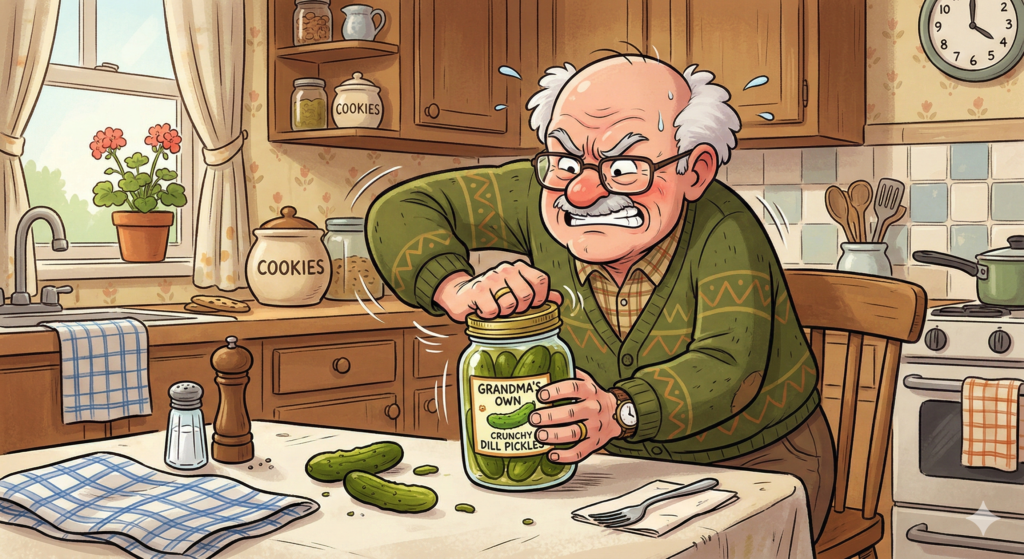
Let’s talk about something you probably never think about until you’re wrestling with a pickle jar at 7 p.m. and seriously considering calling a neighbor for help: your grip strength.
It sounds unglamorous, I know. But hear me out, grip strength is one of the most powerful (and most overlooked) windows into your overall health after 60. Scientists have studied this extensively, and what they’ve found is remarkable: the strength of your handshake can predict everything from your risk of falling to your likelihood of living longer. Not bad for something you do every time you pick up a coffee cup.
So What Exactly Is Grip Strength?
Grip strength is simply the amount of force your hand and forearm muscles can generate when squeezing or holding something. It’s measured with a device called a dynamometer, basically a fancy squeeze gadget that your doctor uses to objectively confirm what your grandkids already suspect when they ask you to open their snack bags.
As we age, we naturally lose muscle mass in a process called sarcopenia. It starts quietly in our 30s and 40s, then picks up speed after 60. The result? Hands and forearms that just don’t pack the same punch they used to. But here’s the good news: this is not inevitable, and it is absolutely reversible with the right approach.
Why Should You Actually Care?
Because weak grip strength isn’t just an inconvenience, it’s a health warning sign. Research consistently links low grip strength in older adults to a higher risk of falls and injuries, reduced mobility, increased risk of heart disease, higher rates of hospitalization, and even a shorter lifespan.
That last one really gets people’s attention. Multiple large studies have found that grip strength is one of the best predictors of longevity in older adults, stronger than many traditional health markers. Think of it as your body’s report card, except instead of math and science, it’s grading your muscles and overall vitality.
On the flip side, good grip strength is linked to better balance, stronger joints, more independence, and a genuine sense of confidence in your own body. Who doesn’t want to be the grandparent who opens every jar on the first try?
How Do You Know Where You Stand?
You don’t need a fancy machine to get a general sense of your grip strength. Try these quick at-home tests:
The Towel Test: Roll a hand towel tightly and squeeze it as hard as you can for five seconds with one hand. Do this two or three times per hand. If it feels like an Olympic event, your grip strength could use some work.
The Stress Ball Test: Grab a small stress ball and squeeze it as many times as you can in one minute. If you’re struggling to hit ten reps, that’s a signal worth paying attention to.
For a real benchmark, ask your doctor to test your grip strength with a dynamometer at your next check-up. They can compare your results to norms for your age and gender, giving you a clear picture of where you are, and where you want to be.
How to Build It Back Up (It’s Easier Than You Think)
The great thing about improving grip strength is that you don’t need a gym membership or expensive equipment. Here are some simple exercises you can start today:
Hand Squeezes: Use a soft rubber ball or a grip trainer. Squeeze firmly, hold for a few seconds, release. Aim for 10–15 reps per hand. Simple, effective, and you can do it while watching TV.
Wrist Curls: Sit in a chair with your forearm resting on your thigh, palm up. Hold a light dumbbell or even a water bottle, and slowly curl your wrist upward, then lower back down. Ten to fifteen reps per side builds the forearm muscles that power your grip.
Towel Wringing: Take a damp towel and twist it in opposite directions as if you’re wringing it out. This engages multiple muscle groups at once and is surprisingly satisfying.
Resistance Bands: Hold a band with both hands and stretch it apart. This builds finger and hand strength while being gentle on the joints, perfect for anyone dealing with arthritis or wrist sensitivity.
Consistency is the key. A few minutes of these exercises several times a week will produce noticeable results within a month or two.
Lifestyle Changes That Make a Real Difference
Exercise alone won’t cut it if the rest of your lifestyle is working against you. Eat more protein, lean meats, eggs, dairy, legumes, and nuts. Many older adults unknowingly under-eat protein, which accelerates muscle loss. Stay hydrated, because dehydration causes muscle fatigue and is one of the most commonly neglected fixes out there. And if you smoke, stop, smoking impairs circulation, which directly undermines muscle function.
Mistakes to Avoid
A few common pitfalls to watch out for: overdoing it (your muscles need rest days to actually get stronger); skipping the warm-up (a few gentle stretches before and after goes a long way); only focusing on hands (grip strength is also powered by your shoulders, back, and core, so a well-rounded routine will get you further); and using bad form (if something feels wrong, it probably is, consider working with a fitness professional when starting out).
Real People, Real Results
Margaret, 67, started squeezing a stress ball after her doctor flagged her grip as below average. Within weeks, gardening and cooking felt easier, and her confidence got a boost right along with her grip. James, 72, had written off his grip after a wrist injury, until guided rehab exercises got him back on the tennis court and keeping up with his grandkids. And Alice, 80, showed up to a community center class frustrated by her inability to open jars. A few months later? She’s opening her own pickles, thank you very much.
The Bottom Line
Grip strength quietly reveals a lot about how your body is doing, and it’s one of the most accessible things you can actually do something about. You don’t need a gym, a trainer, or a lot of time. You need a rubber ball, a water bottle, and about ten minutes a few times a week.
Start small, be consistent, and don’t be surprised when you notice the difference, not just in your hands, but in how you move, feel, and engage with the world. And the next time a stubborn jar lid gives you trouble? That’s not a life sentence. That’s a starting point. And as always, check in with your doctor before starting anything new!
Your grip is telling you something. It’s time to listen.
Did you enjoy this post? Do you want to know when the next post comes out? Consider subscribing. I only send update emails once a week, usually on Friday.