
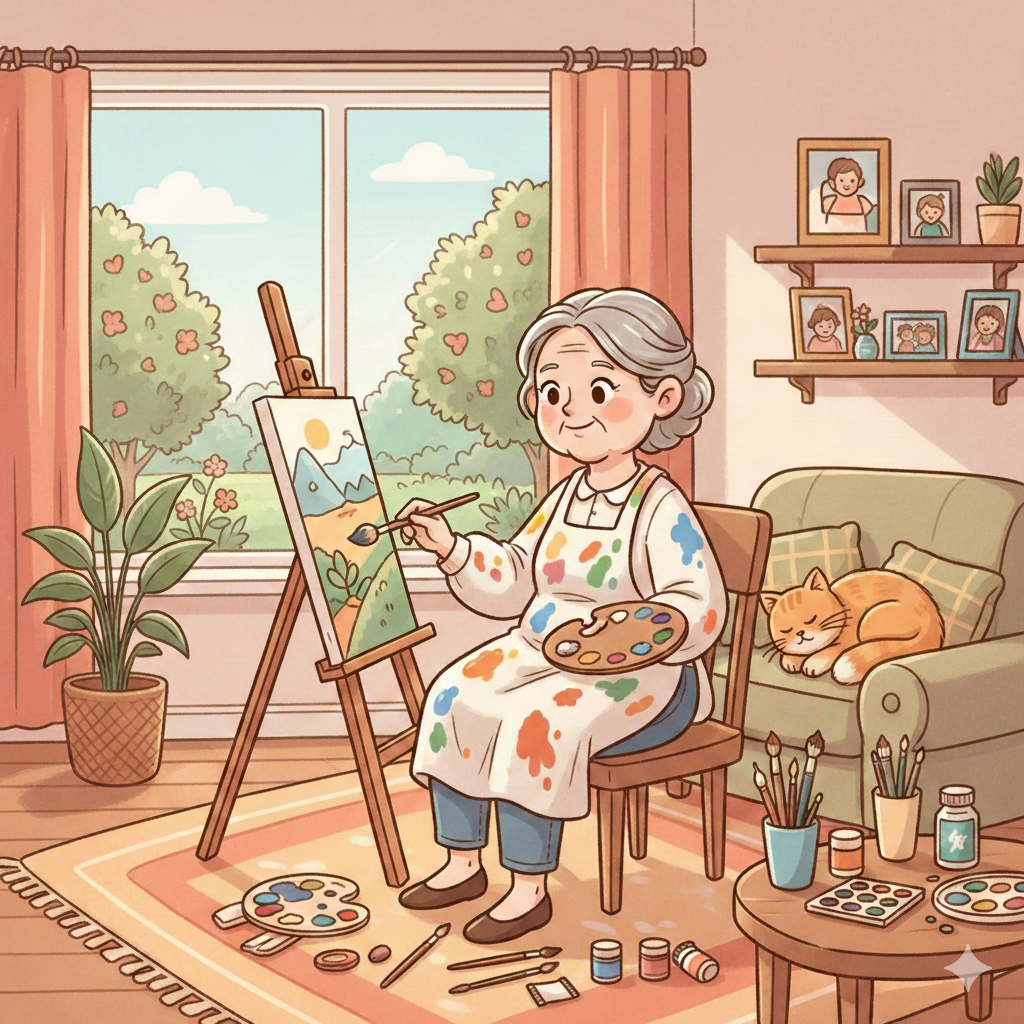
Pick Up a Paintbrush and Paint Your Way to Joy
Let’s be honest, you’ve walked past that blank canvas in the craft store a dozen times, said “someday,” and kept on walking. Well, friend, someday is TODAY. Whether you’ve never held a paintbrush in your life or you secretly doodled masterpieces in the margins of your notebooks back in school, painting is one of the most rewarding, brain-boosting, soul-satisfying hobbies you can pick up, at any age, and especially in your golden years.
So grab your apron (or that old shirt you don’t mind ruining), because I’m diving brush-first into everything you need to know about painting as an active senior.
Humans Have Been Painting Forever, Seriously, Forever
Here’s a fun fact to drop at your next dinner party: humans have been painting for at least 40,000 to 50,000 years. That’s right, our ancient ancestors were decorating cave walls in Spain and Indonesia long before anyone invented the remote control or a decent cup of coffee. From prehistoric cave art to the grand frescoes of the Renaissance, painting has been woven into the fabric of human expression across every culture and civilization.
Fast-forward to the 17th and 18th centuries, when painting became a popular pastime for the upper and middle classes. Amateur artists set up easels in parlors and drawing rooms, essentially the “home studios” of their day. By the 20th century, painting had fully democratized. Thanks to affordable art supplies and accessible instruction, anyone, yes, anyone, could set up a little creative corner at home and let their imagination run wild.
Today, millions of people paint indoors in their homes, spare bedrooms, garages, and dedicated studio spaces. And a growing number of those painters happen to be active, vibrant seniors who’ve discovered that retirement is the perfect time to finally explore their artistic side.
The Wonderful World of Painting Styles, There’s One for Everyone
One of the best things about painting is that it isn’t one-size-fits-all. There are so many styles and mediums to explore that you could spend years dabbling and never get bored. Here’s a quick tour of some popular options:
Watercolor is light, transparent, and wonderfully forgiving in some ways, a wash of color can become a sky, a sea, or a garden in seconds. It’s also easy on the joints since it requires minimal pressure and setup. Great for beginners!
Acrylic painting is the workhorse of the art world. Acrylics dry fast, clean up with water, and can mimic the look of oils or watercolors depending on how you use them. They’re versatile, affordable, and incredibly beginner-friendly.
Oil painting is the classic, rich, luscious, and deeply satisfying. It takes longer to dry, which actually gives you more time to blend and rework your creation. Think of the Old Masters: Rembrandt, Vermeer, Turner. That magic lives on in every tube of oil paint.
Gouache is like watercolor’s bolder, more opaque cousin. It’s vibrant and creamy, popular with illustrators, and a blast to work with.
Acrylic Pour Painting (also called fluid art) has taken the senior art community by storm, and for good reason! You literally pour paint onto a canvas, tilt it around, and let the colors do their thing. The results are stunning, abstract, and zero artistic experience is required. It’s also incredibly satisfying and low-stress.
Bob Ross-style wet-on-wet painting became a cultural phenomenon and remains wildly popular. Following along to a calm instructor painting happy little trees? Yes, please.
No matter which style calls to you, there’s truly something for every skill level, mobility range, and personality type.
Painting Is Especially Awesome for Seniors, Here’s Why
I’m not just saying this to be encouraging. There is real, documented science behind why painting is fantastic for older adults. So let’s talk benefits!
It keeps your brain sharp. Painting engages multiple areas of the brain simultaneously, creativity, focus, fine motor skills, spatial reasoning, and memory. Studies have shown that creative activities like painting can help reduce the risk of cognitive decline and may even delay the onset of conditions like dementia and Alzheimer’s disease. Your brain is a muscle, and painting gives it a serious workout.
It’s great for fine motor skills. The act of holding a brush, mixing colors, and making deliberate strokes helps maintain and strengthen hand-eye coordination and dexterity, skills that matter greatly in everyday life.
It reduces stress and anxiety. There is something almost meditative about the act of painting. When you’re focused on blending the perfect shade of blue or getting that flower petal just right, the rest of the world fades away. Cortisol (your body’s stress hormone) drops. Calm takes over. It’s practically therapy, but more colorful.
It boosts confidence and self-esteem. Finishing a painting, even a simple one, gives you a sense of accomplishment that’s hard to match. “I made that!” is one of the most satisfying things you’ll ever say.
It provides purpose and structure. Having a creative project to return to gives your day shape and direction. That sense of purpose is deeply tied to overall wellbeing and life satisfaction.
Painting Groups: Because Everything Is Better Together
If you think painting is a solitary activity, think again! Across the country, and the world, seniors are gathering in community centers, libraries, senior living communities, and art studios to paint together, and the results are nothing short of magical.
Painting groups and art clubs provide a wonderful sense of belonging. When you share a table with fellow painters, you’re not just sharing paint, you’re sharing laughs, tips, stories, and genuine human connection. And at a time when loneliness is a real concern for many older adults, that connection is priceless.
Look for local groups through your community center, YMCA, library, or senior center. Many areas also have chapters of the National Watercolor Society or local art guilds that welcome all skill levels. Websites like Meetup.com are great for finding painting groups near you. And if you’re not finding what you need locally, don’t overlook online painting communities, platforms like YouTube, Facebook Groups, and dedicated art sites host thriving communities where seniors share work, encourage one another, and learn together from the comfort of home.
Some popular formats include structured classes with an instructor, casual “paint and sip” style get-togethers, themed painting challenges, and open studio sessions where everyone works on their own projects in a shared space. Any way you slice it, painting with others adds a social dimension that enriches the experience enormously.
Painting and Mental Health: A Brush Stroke of Brilliance
I touched on this above, but it deserves its own spotlight because the mental health benefits of painting for seniors are genuinely remarkable.
Painting is recognized as a powerful form of art therapy, and therapists use it specifically to help people process emotions, reduce symptoms of depression and anxiety, and improve overall psychological wellbeing. You don’t need to be in a clinical setting to reap these benefits, simply picking up a brush at home or in a group setting can have a measurable positive impact on your mood.
Research published in health and aging journals has found that regular creative engagement is linked to lower rates of depression and greater feelings of happiness and life satisfaction in older adults. The act of creating something tangible, something you can point to and say “I did that”, is a powerful antidote to feelings of helplessness or stagnation that can sometimes creep in during retirement years.
Painting also helps with mindfulness. When you’re fully immersed in a creative flow state, your mind isn’t ruminating on worries or regrets. You’re simply present, right there with your colors, your canvas, and your imagination. That presence is genuinely healing.
And let’s not forget the sheer joy of it. Making something beautiful, something that didn’t exist before you sat down with your palette, that joy is a real and powerful force for good in your life.
Final Thoughts
Painting is one of those rare hobbies that checks every single box: it’s mentally stimulating, emotionally nourishing, socially enriching, accessible at any skill level, and, perhaps most importantly, genuinely fun. From the first swipe of color across a blank canvas to the satisfaction of a finished piece hanging on your wall, every step of the painting journey is its own reward.
Whether you set up a cozy little studio corner in your spare bedroom, join a lively painting group at your local community center, or simply spread some newspaper on the kitchen table and let loose with a set of acrylics on a rainy afternoon, you are never too old, too inexperienced, or too “un-artistic” to paint. The cave painters of ancient times didn’t have formal training either, and look how well that worked out for them.
So go ahead. Pick up that brush. Squeeze out those colors. Make your mark on the canvas, and on your life. Your inner artist has been waiting long enough.