
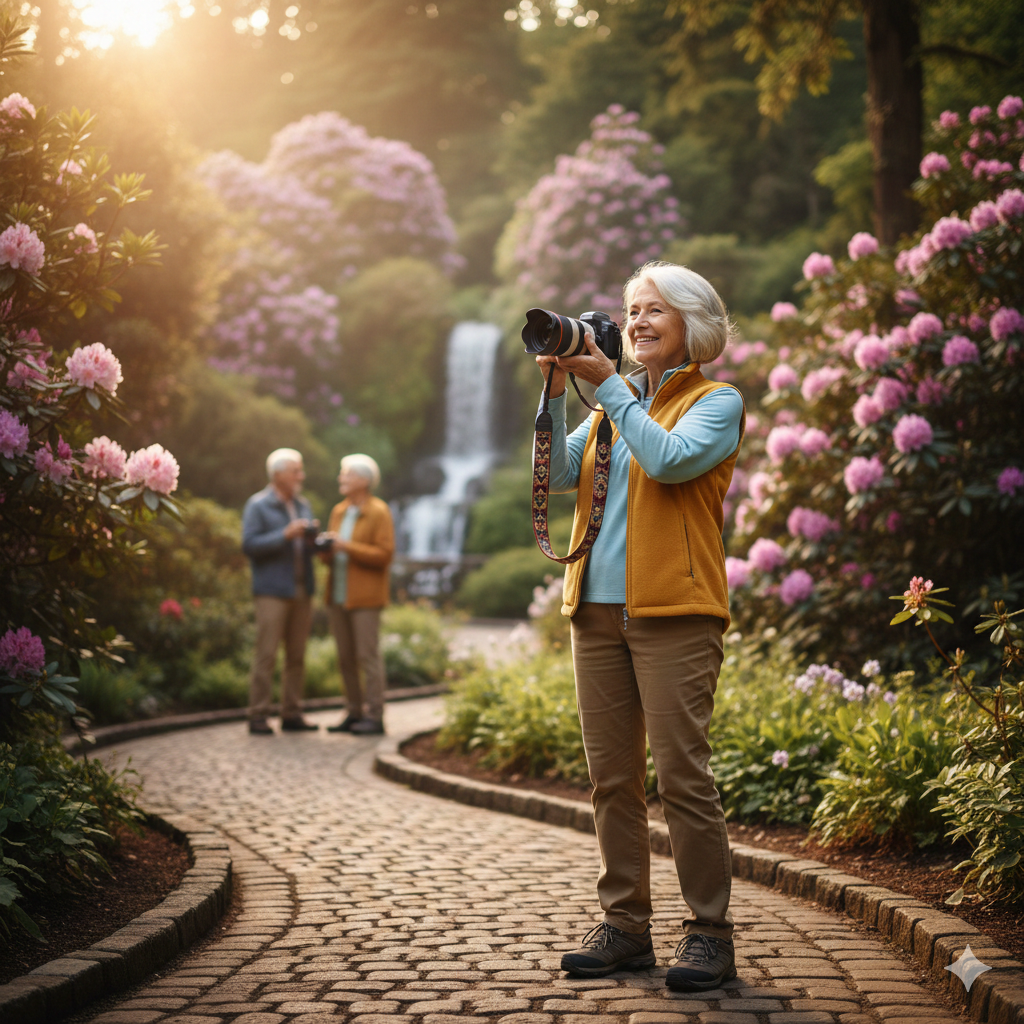
Capturing the Moment: The Ultimate Photography Guide for Life After 60
Photography is one of the most versatile and enriching hobbies you can adopt in your sixties and beyond. It perfectly bridges the gap between digital technology and the great outdoors, offering a way to document your travels, your family, and the quiet, often overlooked beauty of everyday life. On a site dedicated to Life After 60, photography isn’t just about “taking pictures”, it’s about a new way of seeing the world.
The Holistic Benefits: Why Photography is Good for the Soul
Unlike many sedentary hobbies, photography is an “active” art form that provides a unique blend of physical, mental, and emotional benefits.
1. Cognitive Agility and Problem Solving Learning to operate a modern camera or a sophisticated smartphone app is a fantastic way to maintain “neuroplasticity.” When you calculate the exposure for a sunset or navigate the menu of an editing program like Adobe Lightroom, you are exercising your brain’s problem-solving centers. This mental stimulation is vital for staving off cognitive decline and keeping the mind sharp.
2. Physical Health Through “Mindful Walking” Photography turns a standard walk into a treasure hunt. Instead of focusing on the distance, you focus on the details, the way dew sits on a spiderweb or the pattern of shadows on a forest floor. This naturally encourages longer, more frequent outdoor excursions. It provides low-impact exercise that doesn’t feel like a chore because your mind is occupied by the creative quest for the perfect shot.
3. Emotional Resilience and Mindfulness Photography forces you to be present. You cannot take a great photo while worrying about the past or stressing about the future. You must be in the “here and now,” observing the light and waiting for the right moment. This meditative quality has been shown to reduce stress and anxiety, fostering a deep sense of calm and accomplishment.
Mastering the Craft: Technical Essentials Without the Fluff
You don’t need a degree in fine arts to take compelling photos, but understanding a few “rules of the road” will instantly elevate your work from snapshots to art.
- The Rule of Thirds: Most beginners place their subject dead-center, which can feel static and “boring.” Imagine your image is divided by two horizontal and two vertical lines (like a tic-tac-toe board). Try placing your subject, whether it’s a person’s eyes or a lone tree, on one of the four points where those lines intersect. This creates a natural balance and draws the viewer’s eye through the frame.
- Leading Lines: Look for natural lines in your environment, a garden path, a fence, or even the curve of a shoreline. Position yourself so these lines lead the viewer’s eye toward your main subject. This adds depth and a “3D” feel to a flat 2D image.
- The Power of Perspective: We spend most of our lives seeing the world from a standing position. One of the easiest ways to make a photo interesting is to change your height. Try crouching down to a “worm’s eye view” to make small garden flowers look like giants, or find a high vantage point to capture the geometry of a park.
- Understanding Lighting (The “Golden Hour”): Professional photographers rarely shoot at noon. The sun is too high, creating harsh shadows and “blown-out” highlights. Instead, aim for the “Golden Hour”, the first hour after sunrise and the last hour before sunset. The light is soft, warm, and directional, making skin tones look beautiful and landscapes look magical.
Gear Guide for 2026: Finding Your Perfect Fit
Technology has changed rapidly. In 2026, you have three distinct paths to choose from based on your lifestyle and physical comfort.
1. The Smartphone (The “Always With You” Choice) Modern smartphones (like the iPhone 16 or Samsung S25) have revolutionized photography. They use “computational photography” to automatically fix lighting and focus.
- Pros: Extremely lightweight, easy to share photos with grandkids via text, and no extra cost if you already own one.
- Cons: Limited “zoom” capabilities compared to real lenses and harder to handle if you have arthritis or prefer tactile buttons.
2. Mirrorless Cameras (The “Professional” Choice) Mirrorless cameras have replaced the heavy DSLRs of the past. Brands like Fujifilm, Sony, and Canon offer models that are much lighter and smaller.
- Pros: Incredible image quality, interchangeable lenses (great for birdwatching!), and “Electronic Viewfinders” that let you see exactly how the photo will look before you press the button.
- Cons: Can be expensive and requires carrying a small bag.
3. Premium Compacts (The “Middle Ground”) Cameras like the Sony RX100 series or the Ricoh GR fit in a jacket pocket but have large sensors that take much better photos than a phone.
- Pros: Tactile buttons and real zoom lenses in a tiny package.
- Cons: Fixed lenses mean you can’t swap a landscape lens for a wildlife lens.
Photography as a “Side Gig”: Turning Passion into Profit
Many seniors find that their hobby can actually pay for itself, or even provide a nice supplemental income.
- Stock Photography: Websites like Shutterstock or Adobe Stock allow you to upload your high-quality photos. Every time a blogger or a news site buys your photo of a local park or a home cooked meal, you earn a royalty. It’s a great way to earn passive income.
- The “Family Historian” Service: Many families have boxes of old photos or want professional looking portraits of their children but find “studio” photographers too expensive. Offering affordable, local portrait sessions for neighbors is a wonderful way to stay busy and earn extra cash.
- Selling Prints at Local Fairs: There is a deep nostalgia for local scenery. Photos of your town’s landmarks, seasonal changes, or local wildlife often sell well as framed prints or even greeting cards at community markets.
- Blogging and Tutorials: If you’ve spent your career in a technical field, you might enjoy writing about the process of photography. Starting a small blog (or contributing to this one!) allows you to share your tips while building an online audience.
Staying Social: Joining the Community
Photography shouldn’t be a solo journey. One of the best ways to improve is to share your work and get feedback.
- Photo Walks: Many cities have “Photo Walk” groups (check sites like Meetup.com) where people of all ages meet to walk a specific trail and take photos together. It’s a safe, social way to explore the outdoors.
- Online Communities: Platforms like Instagram or Facebook Groups specifically for “Seniors with Cameras” are incredibly supportive. They are less about competition and more about sharing the joy of a good find.
- Local Libraries and Senior Centers: Many offer basic digital photography classes. These are goldmines for finding “photography buddies” to go on excursions with.
Your First Project: The “Seven-Day Challenge”
To get you started, I challenge you to a “Photo-a-Day” week. Don’t worry about quality yet; focus on these themes:
- Monday: Something “Old” (a weathered fence, a vintage book).
- Tuesday: A “Pop of Color” (a bright flower, a red mailbox).
- Wednesday: “Texture” (tree bark, a knitted sweater).
- Thursday: “Perspective” (take a photo from ground level).
- Friday: “Nature in the City” (a weed growing through a sidewalk).
- Saturday: “Golden Hour” (a sunset or long shadows).
- Sunday: “Reflection” (a puddle, a window, or even a mirror).
Photography is a marathon, not a sprint. Every click of the shutter is a lesson learned and a memory preserved. Welcome to the wonderful world of seeing life after 60 through a new lens!
Did you enjoy this post? Do you want to know when the next post comes out? Consider subscribing. I only send update emails once a week, usually on Friday.