
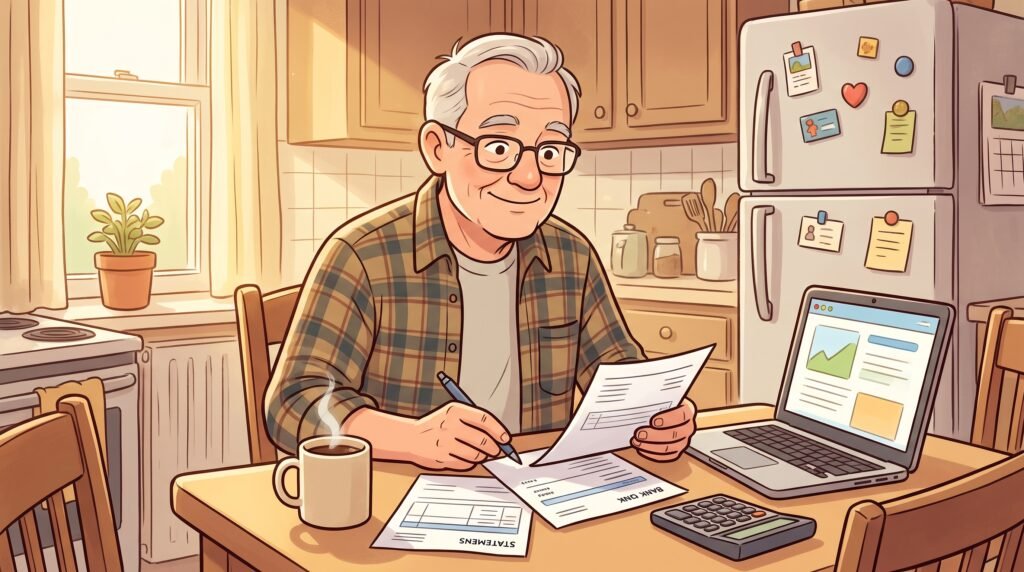
The Monthly Check-Up Your Wallet Is Begging For
Pull up a lawn chair, grab your coffee, and let’s talk about something with all the glamour of a trip to the DMV: your monthly statements.
I know, I know. Nobody has ever said, “Honey, the bank statement came! Let’s light a candle and make an evening of it.” But stick with me, because that boring little piece of paper (or email) might be the cheapest, easiest way to protect your retirement dollars. It takes about fifteen minutes a month, and it can save you hundreds. Sometimes thousands.
Why Bother? Because Nobody’s Perfect
Think of your statement as your money’s report card. It’s the one place where every dollar that came in and every dollar that left is written down in black and white. And here’s the thing: banks make mistakes, stores make mistakes, and crooks make a living off people who aren’t looking. Even we make mistakes, like forgetting that we signed up for something.
The other reason to check every month is timing. Problems are a lot easier to fix when you catch them early. Your bank and card issuer have deadlines for reporting errors and fraud, and the longer you sit on a problem, the harder it can be to get your money back. Waiting until tax time to “look into it” is like waiting until the boat is sinking to check for leaks.
The Good Stuff You Find When You Look
Reading your statement is a lot like cleaning out the junk drawer. You’re going to find things you forgot you had, and some of them are costing you money.
The biggest culprit is the sneaky subscription. That free trial you signed up for back in March? The streaming service nobody has watched since the grandkids went home? The “premium” app you downloaded once and never opened again? They’re all quietly nibbling away at $7.99 here and $14.99 there. Add them up over a year and you might be bankrolling somebody’s yacht. Cancel the ones you don’t use and you’ve just given yourself a raise without asking anybody for it.
You’ll also catch the double charges that happen at restaurants, gas pumps, and stores more often than you’d think, plus the fees that sneak in: monthly maintenance fees, ATM fees, overdraft fees, late fees. Once you spot them, a quick phone call will often get them waived, or you can switch to an account that doesn’t charge them at all. And as a bonus, you’ll get a real picture of where your money goes each month. No judgment. Okay, a little judgment about the third coffee-shop run this week. There’s also a quiet sort of peace that comes from looking it all over and knowing it checks out.
The Not-So-Good Stuff That Happens When You Don’t
Now for the flip side. Not checking your statements is like never looking at the gauges on your dashboard. Everything seems fine right up until the smoke starts.
Fraud is the big one. A stolen card number can rack up charges for months if nobody’s watching, and crooks love to test a number with a tiny charge, a dollar or two, to see if anyone notices. If you don’t, the big charges come next. Honest mistakes pile up the same way: a payment that didn’t post, a deposit that came in short, an amount that’s just plain wrong. And when you finally do notice, you may have missed your window to dispute it, because that clock starts ticking when the statement is issued, not when you finally get around to opening it.
There’s a quieter cost, too. Forgotten subscriptions and fees keep right on charging, month after month, year after year, and nobody ever sends a note saying, “Hey, just so you know, we’ve been taking this since 2023.” And sadly, seniors are a favorite target for scammers. Strange withdrawals, wire transfers you don’t remember, or payments to gift card companies could be a sign that someone got to your account, or that someone close to you is taking advantage of you. That’s not a fun thing to discover, but it’s a much better thing to discover early.
E-Statements vs. Paper: The Great Debate
This one comes down to personal taste, and either way works as long as you actually look at the thing.
E-statements are hard to beat for convenience. They show up the moment they’re ready, nobody can steal them out of your mailbox, and you can search them. Trying to remember what that mystery charge was from last spring? Type it in and there it is. No filing cabinet, no shredder, and most banks will send you a little notice when a new one is ready. The catch is that an email sitting in an inbox between 47 other emails is awfully easy to ignore. You also need a strong password you don’t reuse anywhere else, and you need to stay alert to phishing emails that pretend to be from your bank. Never click a link in an email to log in. Go to your bank’s website or app yourself.
Paper statements have their own charm. You can hold them, spread them out on the kitchen table, and circle things with a red pen, and plenty of folks find mistakes easier to spot on paper. A stack of mail on the counter is also a pretty good reminder. But mail theft is a real thing, and a statement packed with account details is a gold mine for an identity thief. You’ll also have to store the paper somewhere and shred it properly when you’re done, some banks charge a fee for paper, and if you move and forget to update your address, your statements may wander off to a stranger.
So which one should you pick? The one you will actually read. If you’re comfortable online, e-statements are convenient and safe. If paper makes you more likely to sit down and go through it, stick with paper. Some folks even do both for a few months until the habit sticks. The best statement in the world does you no good if it goes unopened.
How to Read a Statement (No Magnifying Glass Required)
You don’t need to be an accountant. Start with the basics: is your name right, and does the starting balance match last month’s ending balance? Then go through the transactions one at a time. Yes, every one. Put a little check mark next to each charge you recognize, and circle anything that makes you tilt your head like a confused dog.
As you go, keep an eye out for recurring charges and ask yourself whether you still use them and still need them. Make sure your Social Security, pension, or other income landed on time and in the right amount. Glance at the fees and interest lines too, since those are the places money tends to leak out. If you keep your receipts, checking them against the statement is a great way to catch mistakes.
Here’s my favorite tip: pick a “statement day” and put it on your calendar, maybe the first Sunday of every month. Pour a cup of coffee, put on some music, and knock it out. Think of it as a date with your money. It’s cheaper than dinner and it never cancels on you.
Found Something Weird? Don’t Panic
It happens to the best of us, and there’s a process for it. First, take a breath and double-check. Sometimes a charge looks strange because the name on the statement isn’t the name on the storefront. “Wholesale Distribution LLC” might just be your favorite hardware store. Check your receipts, and if you share an account, ask your spouse or family member before you assume the worst.
If it still doesn’t add up, call the number on the back of your card or on your bank’s official website. Not a number from an email, a text, or a pop-up, because scammers are great at making fake phone numbers look real. Tell them which charge you’re questioning, the date, and the amount, and ask them to open a dispute or investigation. Write down the name of the person you spoke with and get a reference number. Then follow up in writing, either with a short letter or through your bank’s secure messaging, and keep a copy.
If it turns out to be fraud, ask about getting a new card or account number so the thief can’t keep using the old one, and check your accounts more often for the next few weeks, since crooks sometimes try again. If you think your identity may have been compromised, consider placing a fraud alert or credit freeze with the credit bureaus, and report it at IdentityTheft.gov, which is free and can help you build a recovery plan. I have information on how to do this.
Setting Up Accounts With The Credit Bureaus
One quick note on cards: credit cards generally come with stronger fraud protections than debit cards, because with a credit card the money in question is the bank’s, not yours. With a debit card, the money has already left your account, and it can take time to get it back. That doesn’t mean you can’t use a debit card. It just means you should watch it extra closely.
A Few Extras You May Not Have Thought About
Most banks will let you set up account alerts, and they’re like having a little watchdog. You can get a text or email when a purchase is over a certain amount, when your balance runs low, or when a payment is due. Once a month is the minimum for checking your statements, but a quick peek at your account once a week is even better, and takes about two minutes.
When it comes to keeping the paper, a common rule of thumb is about a year, unless you need the records for taxes, a big purchase, or a dispute or you are an accounting nerd like me and store everything on external hard drives forever…lol. Tax-related records are usually kept longer, so if you’re unsure, ask your tax preparer. Whatever you do, shred old statements instead of tossing them, because they’re loaded with personal information. A cross-cut shredder is one of the best small investments you can make.
If you carry a balance on a credit card, look at the interest line. It may surprise you, and paying even a little more than the minimum can save a lot over time. Credit card statements are also required to show how long it would take to pay off your balance if you only make minimum payments, and that number is often an eye-opener. If you share an account with a spouse or partner, make sure both of you know the routine, so that if one person handles the money, the other still knows where everything is and how to look.
Finally, be wary of fake statements. Scammers sometimes send phony “statements” or “alerts” with a link or phone number to call. If something feels off, don’t click. ALWAYS, go straight to your bank’s website or app, and if you’re ever unsure about a charge, ask a trusted family member to take a second look.
Final Thoughts
Checking your bank and credit card statements is not the most exciting thing you’ll do this month, but it might be one of the most valuable. Fifteen minutes with your statements can catch fraud before it grows, find subscriptions you forgot about, and show you exactly where your money goes so you can make it stretch further. Whether you prefer e-statements or paper, the secret is simple: pick the method that works for you, set a regular day to look things over, and speak up quickly when something doesn’t look right. Your retirement dollars worked hard to get you here, so give them the attention they deserve. Now go pour another cup of coffee, and happy statement hunting!
Do you enjoy being active, seeing cool travel destinations, saving money, and learning new things? Do you want to be kept in the loop whenever I post something new or make an update to the site? Want more tips, ideas, and the occasional bad joke? Subscribe below and I’ll send you one friendly update the last Friday of the month. No spam, just helpful content and a little encouragement for the road ahead.