
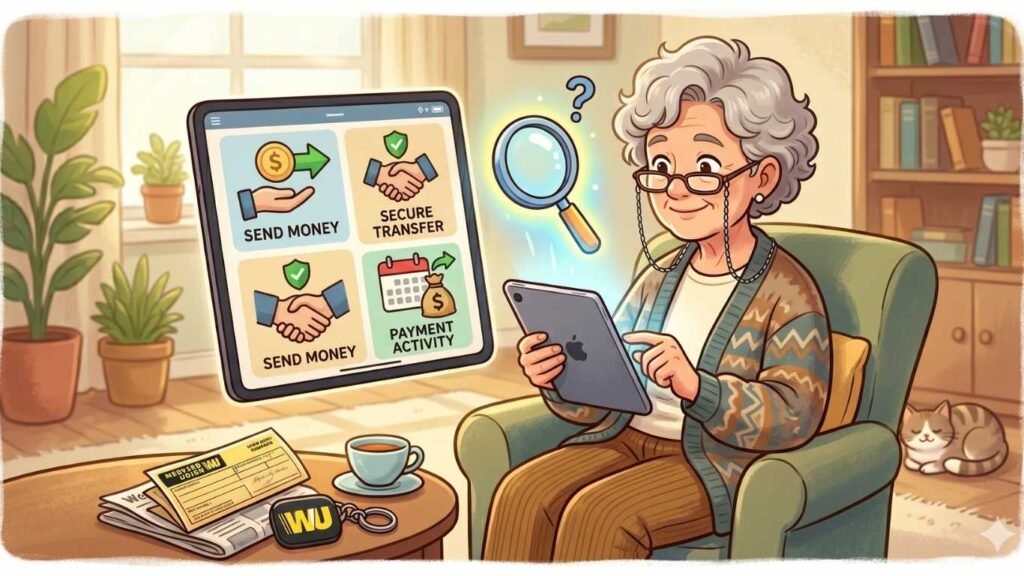
Don’t Hit Send! How Scammers Use Zelle, Venmo, Cash App, and Western Union to Steal From Seniors
Remember when sending money meant driving to the bank, filling out a slip, and chatting with a teller named Doris? Those days are long gone. Today you can transfer money to your grandson in about twelve seconds using nothing but your phone and a Wi-Fi connection. Convenient? Absolutely. Dangerous? You bet, especially if a scammer gets in the way. Let’s take a look at the most popular money transfer services, what they’re actually for, why they’re a scammer’s best friend, and how to keep your hard-earned money exactly where it belongs: in your pocket.
What Are These Services, Anyway?
Before we talk about the bad guys, let’s give credit where it’s due. These apps were built with genuinely good intentions.
Zelle is built directly into many banks’ apps and websites. It was created by a group of major U.S. banks to make it easy to send money instantly between bank accounts, think splitting a dinner bill with your neighbor or reimbursing your daughter for that birthday present she picked up. No fees, no waiting. It’s fast because it’s connected directly to your bank. I use this one a lot.
Venmo is owned by PayPal and works similarly, you link it to your bank account or debit card and can send money to anyone who also has a Venmo account. It started as a way for younger folks to split rent and meals, and it even has a social “feed” where you can see what your friends are paying each other for (privacy tip: turn that off immediately). I have never used this one but I know of a lot of people who do.
Cash App is another peer-to-peer payment service that lets you send and receive money, but also lets you invest in stocks and Bitcoin, which is either exciting or terrifying, depending on your comfort level with financial roller coasters. That is one I completely steer clear of. I have no knowledge in either stocks or Bitcoin.
Venmo, Cash App, and Zelle are all what the tech world calls “P2P apps”, peer-to-peer payment tools. They work great for transactions between people who already know and trust each other.
Western Union has been around since the days of the telegraph, and it’s still widely used today for sending money domestically and internationally, often to people who don’t have bank accounts. It’s a lifeline for families sending money to relatives abroad.
PayPal is the granddaddy of digital payments. It offers buyer and seller protections for online purchases and is commonly used for shopping and business transactions, in addition to person-to-person transfers.
All of these services are legitimate, useful, and used by millions of people every day. The problem? They’re also a scammer’s dream.
The Big Catch: Once It’s Gone, It’s Usually Gone
Here’s the thing that scammers are counting on you not knowing: unlike credit card transactions, which offer chargeback options, payments sent through these apps are immediate and irreversible. Once they convince you to send money, even by mistake, they can vanish within seconds.
Consumer Reports found that none of the four major apps, Zelle, Venmo, Cash App, and Apple Cash, fully reimburse users who are tricked into authorizing payments to scammers. The only time you might have a shot at getting your money back is if your account was actually hacked and you played no role in approving the transfer.
In other words, if you hit send, even because a scammer tricked you into it, you’re likely out of luck. That’s what makes these apps so attractive to fraudsters.
One quick note here. Aside from scammers, if you “accidently” send money to the wrong person, like entered a wrong phone number or email address, you’re out of luck. You’ve made someone very happy by sending them free money.
How Scammers Use These Services
Scammers have gotten very creative. Here are the most common tricks they pull:
The Fake Bank Alert Scam: You get a text that looks like it’s from your bank warning you about suspicious activity. You call the number provided, and a very official-sounding “fraud department” rep tells you to move your money to a “safe account” using Zelle. Spoiler: there is no safe account. This scam often starts with a text asking if you made a large transfer. When you say no, a scammer calls you back pretending to be from your bank’s fraud department, using a spoofed phone number that looks completely legitimate.
The Grandchild Emergency Scam: “Grandma, it’s me! I’m in jail / the hospital / a foreign country and I need money right now. Please don’t tell Mom and Dad!” Scammers often pretend to be a loved one in trouble asking for money to deal with an emergency. They pressure you to act fast and keep it secret, two giant red flags. I have a separate post on this one. The Grandparents Scam
The Fake Marketplace Seller: You find a great deal on Facebook Marketplace or Craigslist. The “seller” insists on Zelle or Cash App as payment. You send the money. The item never arrives. The seller disappears. A scammer promotes merchandise or a concert ticket online, the buyer sends payment via a P2P app, and then never receives anything.
The Overpayment Scam: A buyer claims they accidentally sent you too much money via Zelle or Venmo and asks you to refund the difference, but the original payment was fake or will be reversed. Once you send money back, they disappear and you’re left with the loss.
The Western Union Wire Fraud: Western Union is a favorite for scammers running romance scams, lottery scams, and “you owe back taxes” scams. They specifically choose it because international wire transfers are nearly impossible to trace or reverse.
The QR Code Scam: Scammers place their own QR codes over legitimate ones at parking meters, vending machines, small retail stands, and event check-ins. When scanned, your payment goes directly to the scammer’s account. I have a separate post on this one. The QR Code Scam
How to Spot These Scams
Scammers are smooth operators, but they almost always leave clues. Watch for these warning signs:
- Pressure to act immediately. Legitimate banks, businesses, and family members will give you time to think. Scammers won’t.
- Requests for unusual payment methods. No real business, government agency, or utility company will insist you pay via Zelle, Cash App, or Western Union.
- Anyone asking you to keep it secret. If a “grandchild” asks you not to tell the family, hang up and call that family member directly on a number you already have.
- Unsolicited contacts about account problems. If your bank texts or emails you about fraud, don’t use the contact info in that message. Call the number on the back of your debit card instead.
- Too-good-to-be-true deals. If the price seems unbelievably low, trust that instinct.
- Requests to move money to a “safe” account. No real bank will ever ask you to do this. Ever.
How to Protect Yourself
The best defense is a healthy dose of skepticism and a few good habits:
- Only send money to people you know and trust. These apps were designed for friends and family, not strangers.
- Consider setting up a separate checking account with a small amount of money linked to your payment apps. That way, even if you’re tricked, the damage is limited.
- Verify before you send. If a “family member” calls asking for money, hang up and call them back on their regular number.
- Never scan a QR code from an unknown or unverified source. Always check where it’s pointing before you tap.
- Turn on two-factor authentication on all your payment apps. It adds an extra layer that makes it much harder for scammers to access your accounts.
- Use credit cards for purchases from strangers or online sellers, they offer far better fraud protections than any P2P app.
What to Do If You’ve Been Scammed
If you think you’ve been targeted, or already hit send, move fast. Time matters.
Step 1: Contact the app immediately. Cash App support can be reached through the app or by calling 1-800-969-1940. Venmo can be reached through the app or at 1-855-812-4430. For Zelle, contact your bank or credit union directly, since they operate the Zelle service. PayPal has a Resolution Center online or can be reached at 1-888-221-1161.
Step 2: Call your bank. Even if you used an app, your bank may be able to flag or freeze the transaction if you act quickly.
Step 3: File a report with the FTC. Report payment app scams to the Federal Trade Commission at ReportFraud.ftc.gov. When you report a scam, you help the FTC and other law enforcement build cases against scammers. You can also call them at 1-877-382-4357.
Step 4: File a police report. Although law enforcement may not investigate every case individually, filing a police report creates an official record that can be helpful later in case of additional fraud or identity theft.
Step 5: Report to IC3.gov. The FBI’s Internet Crime Complaint Center handles online fraud and scams. The more reports they get, the better chance of tracking down the criminals behind these schemes.
Step 6: Call the AARP Fraud Watch Network Helpline at 1-877-908-3360. They are open Mon-Fri Am- 8 PM. Eastern Time. It’s free, and they’re specifically trained to help seniors navigate exactly these kinds of situations. You do not need to be an AARP member to utilize this service.
Final Thoughts
Payment apps like Zelle, Venmo, Cash App, and Western Union are genuinely useful tools, they’ve made everyday financial life a lot more convenient for millions of people. But that convenience is a double-edged sword. Scammers have figured out that these apps move money fast, reverse it rarely, and can confuse even the most careful people when panic or urgency is involved. The single most powerful thing you can do is slow down. No real emergency requires you to wire money in the next five minutes, and no legitimate bank, government agency, or prize committee will ever demand payment through a phone app. If something feels off, it probably is, and “I’m going to call you back” is one of the most financially protective sentences in the English language. Stay skeptical, stay safe, and for goodness’ sake, don’t hit send!!!